Egypt Protests

Updated: Oct 25, 2021
What role has social media played in this revolution?

“Digital media has not only caused a cascade of civil disobedience to spread among populations living under the most unflappable dictators, it has made for unique new means of civic organizing.” (Howard, 2011)
In early 2011 the Middle East experienced a series of anti-government uprisings, protests and armed rebellions, known as the ‘Arab Spring’. Tunisia was the first Arab country to form an uprising against their own government, successfully forcing out their leader Zine El Abidine Ben Ali. The successfulness of the uprising in Tunisia sparked the flame for other countries across the Middle East to follow in their footsteps and fight back against their own governing power.
The protests that took place in Egypt began on the 25th January 2011, with tens of thousands of Egyptian citizens marching on Tahrir Square against Hosni Mubarak’s presidency. President Hosni Mubarak had been in power of an authoritarian dictatorship for 30 years, maintaining his control over Egypt through the use of the violent power of the army and secret police. Mubarak was considered by the USA as a negotiator for peace in the Middle East however the people of Egypt thought differently. The people had finally had enough and with the encouragement of the success of Tunisia’s uprising, they gathered at Tahrir Square to protest. The protests lasted 18 days, with the crowds chanting “Freedom, Bread and Social Justice”, however these protests led to mass violence.
On the 4th February 2011, the people began to call for Mubarak’s resignation and on the 11th Mubarak stepped down as president. For the next 6 months the military assumed power as the protests continued. In November, parliamentary elections were held which resulted in the Muslim Brotherhood gaining majority of the votes; these results showcased a vast predominance of the Islamic religion in the Egyptian community. Although this result was not well received by all, the people continued to mass protest pushing for “Democracy like America”, they wanted to fight for their right to have a say in who leads them.
It wasn’t until May 2012 democracy was allowed and in turn Mohammed Morsi became Egypt’s first freely elected president. The people of Egypt were fighting for a democratic society and they were successful in doing so, they were also fighting for a new constitution to be written. Morsi in partnership with the Islamic assembly created a new constitution in November 2012, this one more focused on the values of Islam. The new constitution was approved by the referendum in December. However, citizens were not satisfied with the lack of personal freedoms, and minority rights included in the constitution, mass protests ensued for the next 6 months
On July 1st 2013, the military stepped up for the people of Egypt giving President Morsi a 48-hour ultimatum to step down or die. When the 48 hours came to an end the Military assumed power appointing the head of constitutional court, Adly Mansour as interim president, while the Muslim Brotherhood leaders were arrested and Mohammed Morsi disappeared. Mansour announced he would not run for presidency but return to his previous position in the courts, he was in office until June 8th 2014 when Adbel Fattah el-Sisi won the election and assumed presidency. The people of Egypt voted for Sisi in hopes that he would be true to them and keep their promises, due to his strong ties to the military and past diplomatic career positions. Sisi continues his presidency in 2015.
During the initial protests in Tahrir Square in 2011, a protestor spoke out on twitter about the role that social media plays and how important it is to their fight, “We use Facebook to schedule the protests, Twitter to coordinate, and YouTube to tell the world.” (Howard, 2011). This is how many of the campaigns during the past 4 years have been organised, through the use of social media. Sociologist Manuel Castells calls this use of social media, mass communication, “In recent years, the fundamental change in the realm of communication has been the rise of what I have called mass self-communication – the use of the Internet and wireless networks as platforms of digital communication. It is mass communication because it processes messages from many to many, with the potential of reaching a multiplicity of receivers, and of connecting to endless networks that transmit digitised information around the neighbourhood or around the world.” (Castells, 2012).
These messages were posted on social media for the purpose of gathering the locals in Cairo to come to Tahrir Square and fight for what they want. What it has effectively done is not only reached the locals but also people around the world, social media allowed the people of Egypt to transmit their message on a global scale. “Social media introduced speed and interactivity that were lacking in the traditional mobilization techniques, which generally include the use of leaflets, posters, and faxes. For instance, social media enabled domestic and international Egyptian activists to follow events in Egypt, join social-networking groups, and engage in discussions.” (Eltantawy & Wiest, 2011).
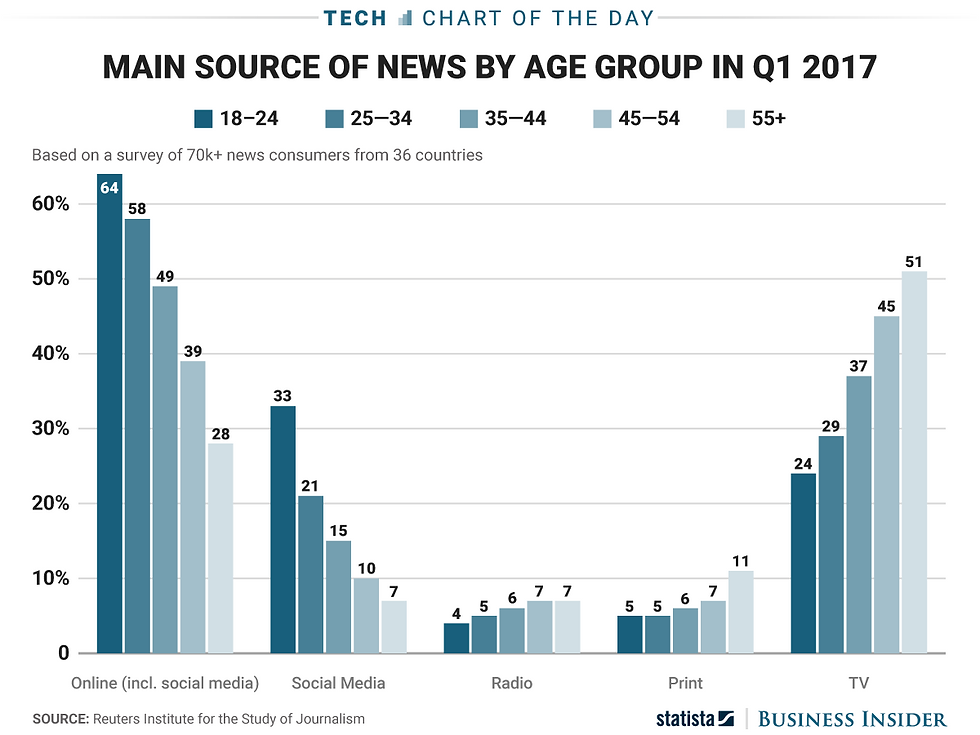
The world of digital media has allowed us as a global community to progress from the days of manually spreading the word by telling people in person or sending a letter to now being able to type a message on any of your social media accounts and it’s immediately out there for anyone to read as well as to share. In a survey conducted by Zeynep Tufekci and Christopher Wilson, they asked participants of the protests in Tahrir Sqaure of their social media use in regards to the political protests. What they found was only 28.3% of people found out through Facebook, 13.1% over the telephone, 4% through TV, around 1% through e-mail, Twitter, radio, newspaper or other printed sources, and 48.4% heard about the demonstration through face-to-face communication. Although these results show very low statistics for social media sources, this was the initial awareness of the demonstration which was taking place, Tufekci and Wilson saying “traditional mass media were far less important for informing people about the protest than were more interpersonal means of communication”, however during the protest texting jumped from 0.8% of people (to inform of protests) to 46% of people using it, this time to share information about the demonstrations while they were still on going, as a form of providing updates on the situation.
Social media wasn’t only used to inform and share information before and during the uprising, it was also used as a form of campaigning against the Mubarak authoritarian dictatorship. There were two rivalling sides to these protests, those who were pro-Mubarak and those who were anti-Mubarak, the anti-Mubarak protestors used the social media outlets to fuel their campaign and make sure their ‘demands’ were being heard by Mubarak and his government, as well as to let, not only Egypt know, but the world know that they were not going to back down until they achieve what they are protesting for. From the research of Tufekci and Wilson it shows the reaction from the Mubarak government due to the magnitude of social media backlash, “There can be little doubt that Mubarak’s state security apparatus was persuaded of the threat posed by digital platforms and social media.
In a desperate attempt to regain control of events, the State Security Intelligence Service blocked activists’ cell phones and, on January 25, it blocked Twitter, on January 26, Facebook, on January 27, domestic and outbound international SMS services and, beginning on January 28 (when Wael Ghoneim was arrested), it shut down Egypt’s four Internet Service Providers and closed off virtually all Internet access.” (Gregory, 2013). The outpour of support of social media pushed the governing power into a corner, where they felt their only option was to completely cut off their people’s access to these outlets but even that didn’t last very long.
When Mubarak stepped down from his role as Egyptian president and Morsi stepped up to assume power, the civil unrest continued with online media campaigns resurfacing once again this time calling for the removal of Morsi. Twitter accounts of many Egyptian locals, as well as international users were using their accounts to support the hashtag “#AntiMorsi”, allowing for a community of users online to read the tweet thread of those who were supporting this particular regime alongside them.
The Arab Spring, along with the overall Egyptian Revolution saw a community of people coming together to essentially, fight for their rights. Through the use of digital media they were able to organise, coordinate, spread awareness and keep the world updated on the events taking place both negative and positive. These mass protests caused injuries, deaths, corruption, and mass violence but through all of this the people of Egypt were still able to achieve the change they wanted. It took three years for Egypt to find a true and legitimate leader; Sisi is a president the country trusts and believes will fulfil the needs of the country. Every year Egypt gathers in a positive protest to commemorate the overthrowing of Mubarak on 25th January 2011, the Day of Revolt.
References
Castells, M. (2012). Opening: Networking minds, creating meaning, contesting power. In Networks of outrage and hope: Social movements in the Internet age (pp. 1-19). Cambridge, UK: Polity.
Eltantawy, N., & Wiest, J. (2011). The Arab Spring| Social Media in the Egyptian Revolution: Reconsidering Resource Mobilization Theory. International Journal Of Communication, 5, 18. Retrieved from http://ijoc.org/index.php/ijoc/article/view/1242/597
Gregory, D. (2013). Tahrir: Politics, Publics and Performances of Space. Middle East Critique, 22(3), 235 – 246. doi: 10.1080/19436149.2013.814944
Howard, P.N. (2011 February 24). The Arab Spring’s Cascading Effects. Pacific Standard. Retrieved from http://www.psmag.com/politics/the-cascading-effects-of-the-arab-spring-28575
Tufekci, Z. and Wilson, C. (2012), Social Media and the Decision to Participate in Political Protest: Observations From Tahrir Square. Journal of Communication, 62: 363 – 379. doi: 10.1111/j.1460-2466.2012.01629.x
Images
Szoldra, P. and Kelley, M. (2013, July 1). [All Images] These Photos Show Just How Massive The Protests In Egypt Have Become. Retrieved from http://www.businessinsider.com.au/egypt-protest-pictures-2013-6

Comments